Shopping for shutters gets confusing fast: everybody talks about their "premium construction" and nobody tells you what's actually in the panel. So here's the straight version — every part inside a factory-built REDI shutter, what it does, and why it matters when you live with the things for years.
3.5-inch louvers: the sweet spot
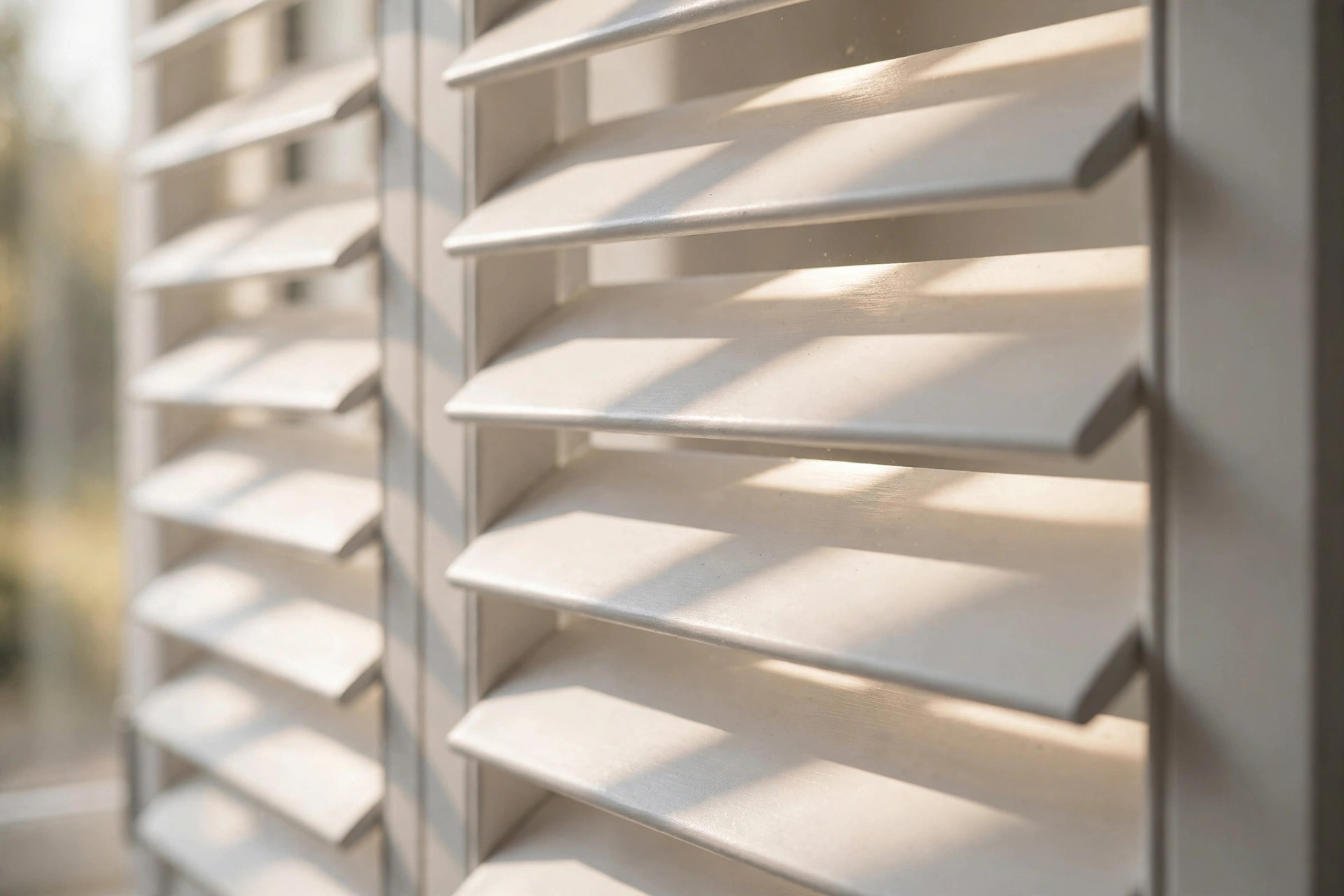
The louvers — the slats that tilt to control light — are 3.5 inches wide. That's the most popular width in plantation shutters for a reason: wide enough to give you a clean, open view when tilted flat, narrow enough that each louver still feels substantial. When they close, the 3.5-inch blades stack into a solid, private surface with no gaps to peek through.
Bigger louvers (4.5 inches) exist in the custom world and cost more; smaller louvers (2.5 inches) belong to a different, older look. 3.5 is the mainstream winner — it's what your eye expects plantation shutters to look like.
Hidden gear tilt: no rod, no cords, no clutter
Older and cheaper shutters move their louvers with a visible tilt rod — the stick running down the middle of the panel that you push up and down. It works, but it blocks part of your view and it's one more thing to grab, snag, and look at.
REDI shutters use a hidden gear tilt system concealed inside the stile (the vertical side rail of the panel). The louvers are linked by gears you never see. To tilt them, you just push the louvers themselves with your hand — they move together, smoothly, and hold whatever angle you leave them at. The front of the panel stays clean: no rod, no cords, nothing dangling.
50/50 split control: daylight up top, privacy down low
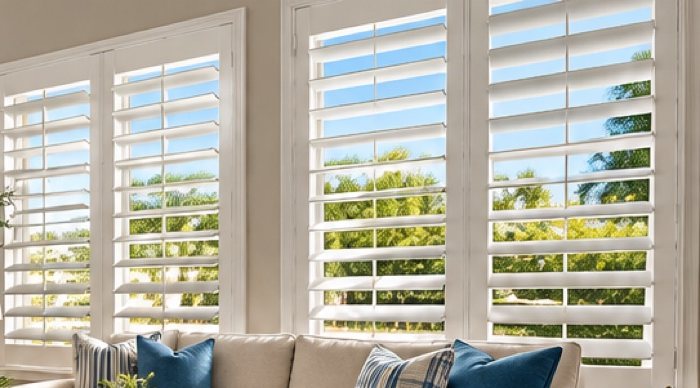
This is the feature people fall in love with after living with shutters for a week. 50/50 split control divides the panel into two independently tilting sections — the top half and the bottom half move separately. Open the top louvers for sunlight and a view of the sky while the bottom half stays closed, blocking the view in from the street.
Every REDI size includes split control standard — not an upgrade, not a checkbox you'll forget to tick. Street-facing bedrooms, living rooms at sidewalk level, bathrooms: this is the feature that makes shutters feel smarter than blinds, which are all-or-nothing by comparison.
Two-way close rails and recessed magnets
Two more details that show up in daily life. Two-way close rails mean the louvers close from both directions — you never have to think about which way "off" is. And recessed magnets hold the panels flush and shut on their own. Panels don't drift open on their own in a draft, and there's no latch to fiddle with every time you close up for the night.
Cordless, child-safe, Snow White
Three quick facts worth knowing:
- Cordless operation — no cords anywhere on the panel, so it's the child-safe standard: nothing dangling for kids or pets
- Snow White factory finish across the entire REDI line — the classic plantation shutter white, baked on at the factory
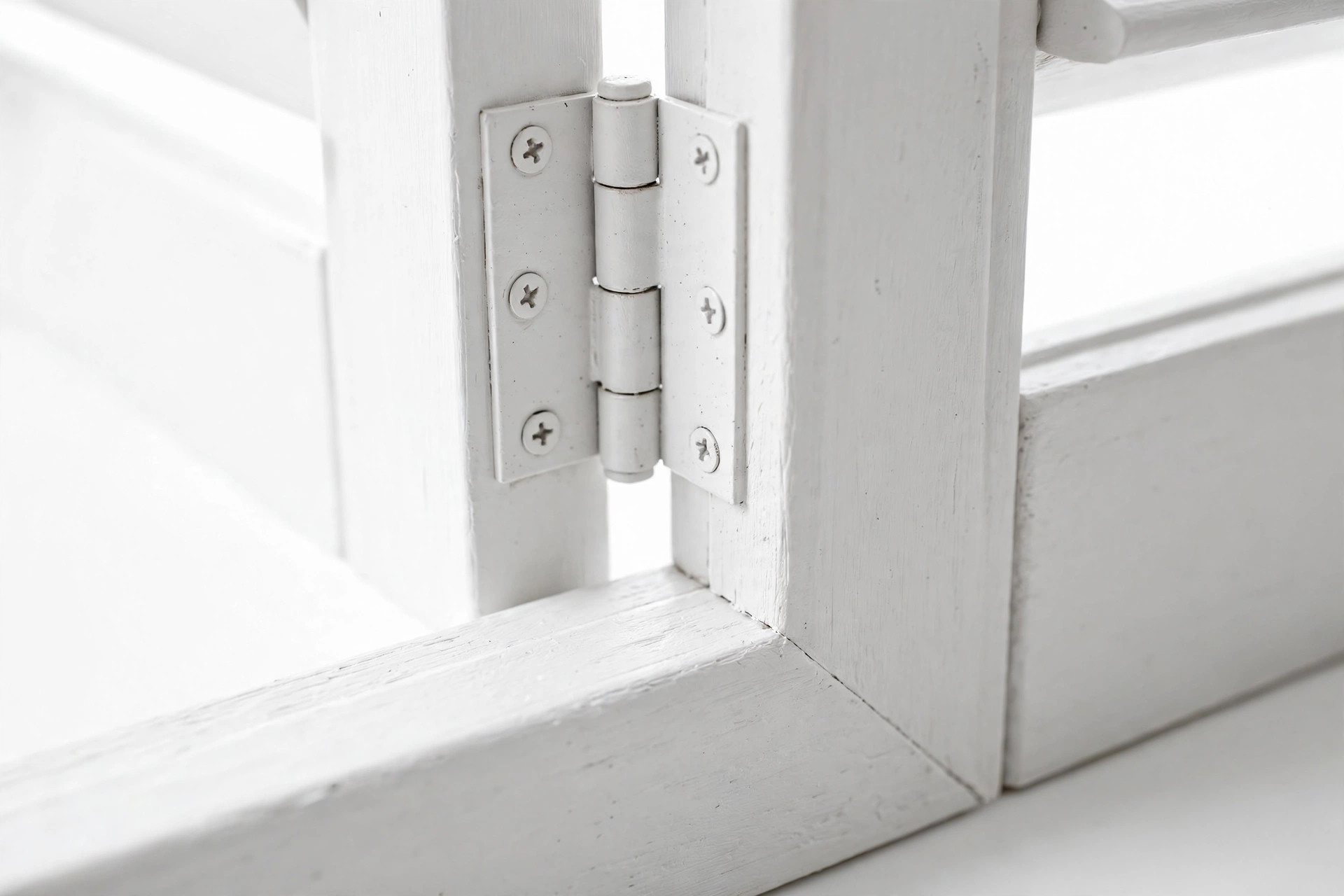
- White hinges and clean hardware that disappear into the finish instead of drawing the eye
- Minimum frame depth 1-3/4 inches for inside mounts — check your depth before you order
Anatomy questions, answered
The shutter panel is split into two independently controlled sections — top and bottom. Tilt the top louvers open for daylight while the bottom stays closed for privacy. Every REDI size includes it standard; no upcharge, no option to forget.
Know what you want? Measure and order.
Match each window to its factory-built RS size on the size chart — from $18.95/sq. ft. plus a flat $200 delivery per order. Most shutters delivered in as little as 48 hours.